
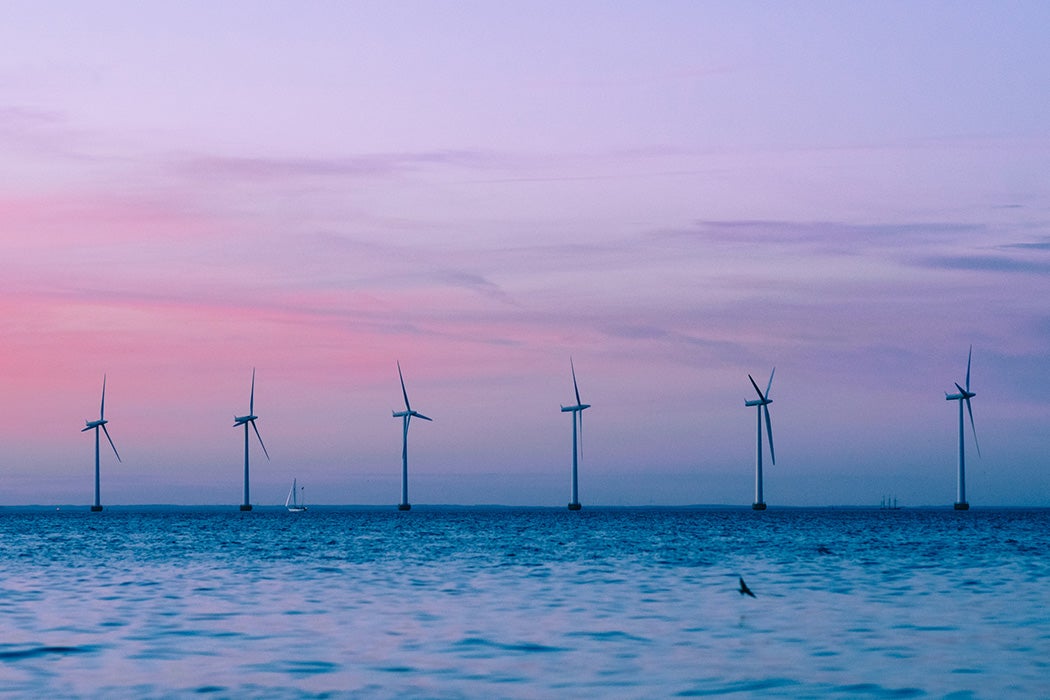
Many researchers argue that it is essential to reduce emissions from fossil fuels and that renewable energy is the future. Offshore wind is a leading clean energy option in Europe, the US coast and many other parts of the world.
Installing turbines is one of the first steps in implementing wind power, but monitoring these areas over time is key to determining how this clean energy option might affect the surrounding environment. .
A team of scientists led by Zoë Hutchison monitored the benthic ecosystem, or the lowest level of the ocean, to determine ecosystem health for four years after the turbines were installed. The overarching goal was to determine what specific monitoring efforts should be undertaken in the future as the United States continues to pursue and install offshore wind projects.
Europe has been building wind turbines in suitable coastal locations for some time, while the United States is just beginning similar projects. But that changes; in 2019, China and the United States led the world in building new offshore wind farms. The Block Island Wind Project, where this study took place, is located off Rhode Island. It was the country’s first offshore project.
The Hutchison-led team monitored macrofauna, organisms such as snails and crustaceans, and ocean floor sediments. The main objective was to observe if there were any changes due to the installation and siting of the turbines. The secondary objective was to determine what type of management was needed to monitor the health of the oceans in these projects.
This type of management is called targeted surveillance. “Baseline monitoring aims to objectively assess impacts… Targeted monitoring aims to understand the underlying ecological processes behind priority observed impacts,” the researchers explain. With this method, scientists can develop a set of monitoring techniques to ensure ocean health alongside renewable energy projects.
During four years of monitoring, they found that mussels and other filter feeders quickly colonized the area where the turbines were installed. Fish communities have also changed over time, with Atlantic bass settling in these changed areas.
These results are similar to studies conducted in Europe, leading the authors to conclude that habitats shift after the installation of wind turbines. The composition of the sediments changed from a soft, sandy bottom to a hard ocean floor dominated by mussels. This could impact which species are well adapted to a particular ecosystem and may explain the change in fish communities.
As wind power becomes competitive with fossil fuels, this study and others show that more research is needed to determine the full effects of these systems on the environment. Regardless of the location of an offshore wind project, researchers have proposed a standard set of monitoring projects to understand the scope of the system over time.
Hutchison concludes by emphasizing the importance of surveillance: “The United States should now consider implementing a coordinated surveillance strategy to enable an effective, adaptive, combined baseline and targeted surveillance system.”
Support JSTOR everyday! Join our new membership program on Patreon today.
Resources
JSTOR is a digital library for scholars, researchers and students. JSTOR Daily readers get free access to the original research behind our JSTOR stories.
By: Zoë L. Hutchison, Monique LaFrance Bartley, Steven Degraer, Paul English, Anwar Khan, Julia Livermore, Bob Rumes and John W. King
Oceanography, vol. 33, No. 4, SPECIAL ISSUE ON UNDERSTANDING THE EFFECTS OF OFFSHORE WIND ENERGY DEVELOPMENT ON FISHERIES (DECEMBER 2020), pp. 58-69
Oceanographic Society
